



We received an emergency service call in Elk River, MN after a homeowner reported a strong smell of natural gas inside the home. Any time there is a possible gas leak, especially during the freezing winter months in Minnesota, this becomes an urgent safety issue that must be resolved immediately.
When we arrived, we conducted a full inspection using professional gas detection equipment and soap bubble testing. While we were unable to visually locate an active leak at exposed fittings, the gas odor was clearly present inside the home and our gas sniffer continued to alarm. At that point, we isolated different sections of the home’s gas piping and performed a full air pressure test on the system.
During the test, we immediately confirmed a steady pressure drop in the gas lines, verifying that there was an active leak within the piping system. Due to the cold outdoor temperatures and the home’s reliance on constant heat, this qualified as an emergency repair situation.
By continuing to pressure the system and listening inside wall and ceiling cavities, we were able to pinpoint the leak behind a built-in soffit hidden behind trim boards. The home’s main gas line had been rerouted through this soffit several years earlier during renovations. Because the piping was concealed behind finished shiplap, soffits, and trim, a direct repair would have required extensive demolition of finished interior surfaces.
Gas System Types in Minnesota Homes
Low-pressure systems are more common in older homes. These systems are regulated before the gas meter and operate at approximately 7 to 14 inches of water column pressure throughout the home. Because of the lower operating pressure, larger-diameter piping is required to supply enough BTUs to all appliances, typically using iron pipe.
High-pressure gas systems deliver 2 PSI gas pressure from the meter to an indoor regulator, allowing smaller piping to transport the same BTU load more efficiently. With these systems, gas mains may be run in 3/8”, 1/2”, 5/8”, or 3/4” copper, or similar sizes using CSST or iron pipe.
Our Gas Leak Repair Solution
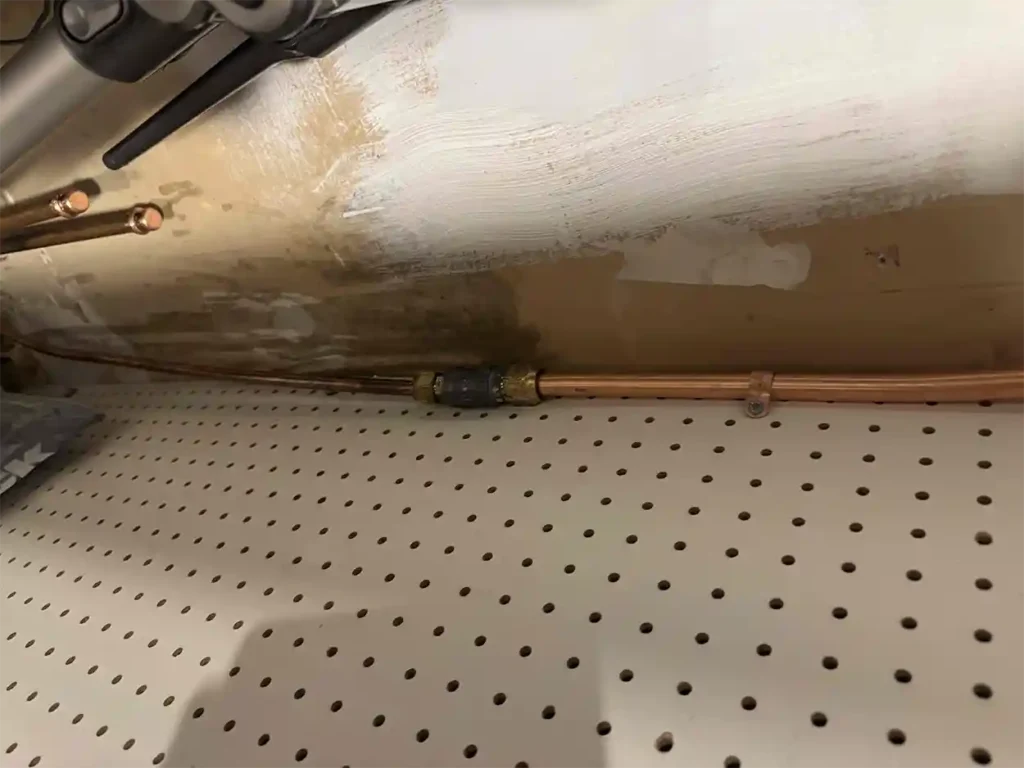
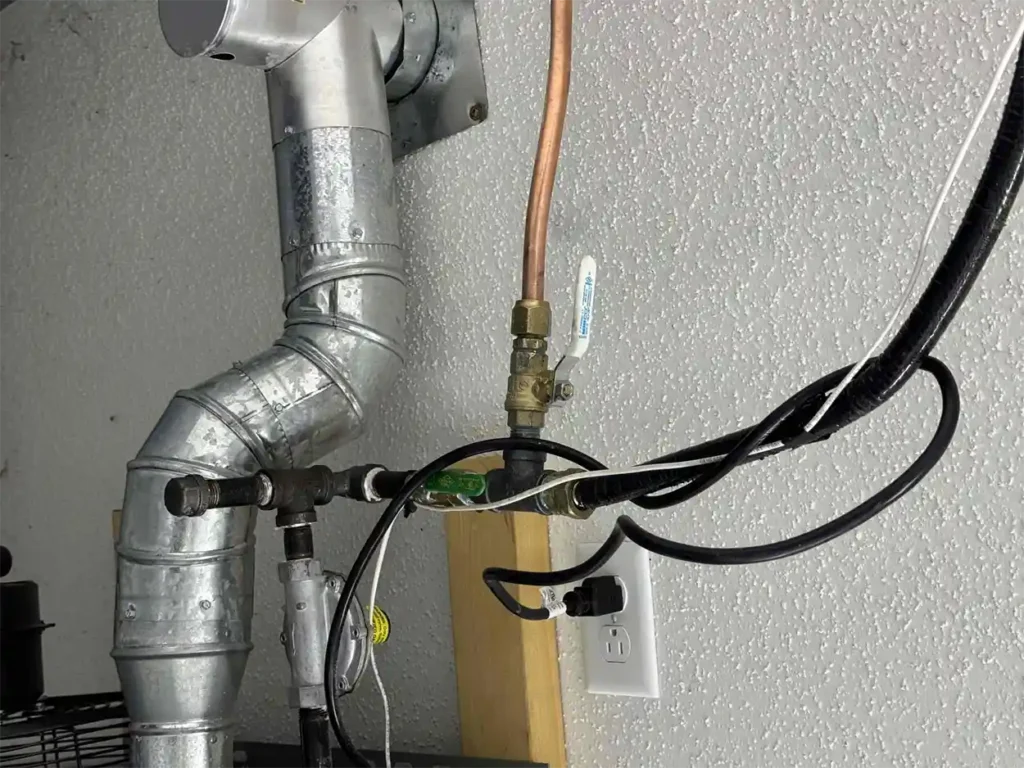
We abandoned the leaking soffit line and ran a new copper gas line through the attic into the garage, tying into an existing high-pressure gas line feeding the garage heater. We calculated the full BTU load, sized the gas piping properly, installed a new shutoff valve, tied into the regulated system, and completed full air pressure testing. The entire repair was completed in under three hours and the home’s heat was restored safely.
Gas Leak Safety
If you ever smell natural gas in your home: leave immediately, contact your gas utility company, and call a licensed plumbing or gas professional.
Service Area
Proudly serving the Minneapolis–St. Paul metro area and surrounding communities. Even if you live as far West as Annandale, Big Lake, or Buffalo; East as Lino Lakes, Stillwater, or White Bear Lake; South as Burnsville, Eagan, Cottage Grove, or Woodbury; or North as Princeton, Cambridge, or Elk River — we service everywhere in between within approximately 40 to 45 miles of Ramsey, Minnesota, where our shop is located
Gas Services We Provide
Whether you need a small gas leak inspected, think you may have a gas leak, or just need a gas appliance hooked up, our team can help. We install and connect gas appliances including dryers, ovens or ranges, garage heaters, and water heaters.
It’s a common misconception that plumbers don’t handle gas piping. In reality, licensed plumbers are the primary trade responsible for installing and repairing residential gas lines.
Whether you need a full gas line repipe or a simple gas leak repair, give Beeline Plumbing a call for fast, safe, professional service.
Trusted Specialists
Gas piping repairs demand accurate load calculations and strict code compliance. If you smell gas or suspect a leak, contact Beeline Plumbing for fast, reliable emergency service throughout the Twin Cities metro area.